Republic Day 2026: India marks 77th parade at Kartavya Path with ‘Vande Mataram’ at the centre
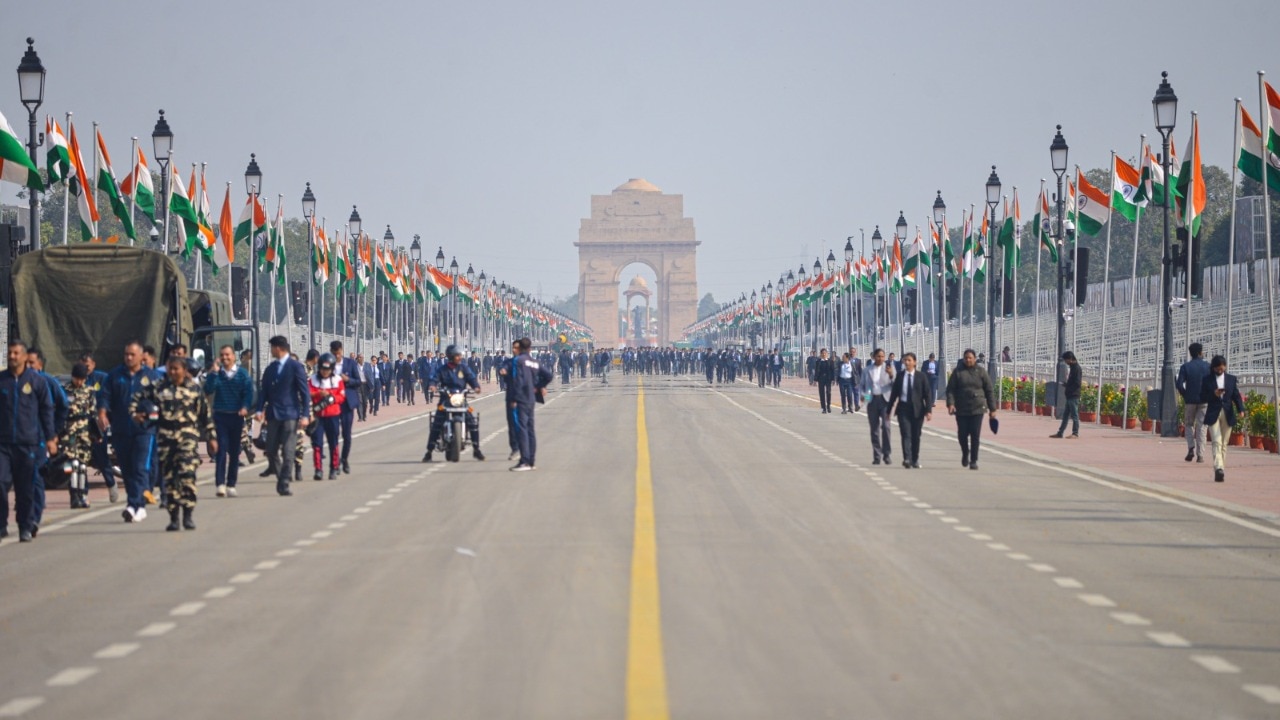
India celebrated its 77th Republic Day on Monday, January 26, 2026, with a grand parade at Kartavya Path in New Delhi. The ceremony spotlighted 150 years of the national song ‘Vande Mataram’, alongside military displays, cultural performances and tableaux highlighting states and ministries. European Union leaders attended as chief guests, underscoring New Delhi’s expanding global engagement.
A Republic Day built around ‘Vande Mataram’
India marked Republic Day on January 26, 2026, with the central ceremony unfolding on Kartavya Path, the ceremonial boulevard that anchors national celebrations in the capital. The 2026 edition carried a strong cultural framing: the 150th anniversary of ‘Vande Mataram’, a song that became a rallying point during the freedom movement and remains a defining symbol of India’s national imagination. Throughout the parade, performances, decorations and thematic motifs returned repeatedly to the sesquicentenary, blending patriotism with a curated historical narrative.
Ceremony, leadership and the day’s key guests
The parade was presided over by President Droupadi Murmu, with Prime Minister Narendra Modi among the central participants. In keeping with the diplomatic emphasis of this year’s event, European Council President Antonio Costa and European Commission President Ursula von der Leyen attended as chief guests, a presence highlighted across coverage as a significant European Union moment at the parade. The ceremony was also positioned as a platform where domestic tradition and international optics intersect—India using a national day to signal institutional stability and external partnerships at the same time.
Tableaux, culture and a calibrated national showcase
As in previous years, the Republic Day parade’s storytelling leaned heavily on tableaux and cultural segments. States and central ministries presented floats that mixed heritage imagery with “development” messaging, aligning local traditions to a broader national frame. The programme’s choreography—music, dance and coordinated visuals—was designed to move from historical references to contemporary capability, tying freedom-era symbolism to modern statecraft. For many spectators, the parade’s strongest impression came from the way it packaged India’s diversity as a single, continuous narrative of unity.
Military element and public messaging
Republic Day remains a major platform for defence presentation, and 2026 continued that pattern with a prominent military component. Marching contingents, equipment showcases and aerial elements were used to underline readiness, indigenisation and organisational discipline. The messaging—visible in visuals and official commentary—was that India’s security posture and its civilisational identity can be presented side by side: a cultural republic that is also a capable state. Public attention around the parade also reflected the continuing role of Republic Day as a shared national ritual, particularly when political debates are intense through the year.
Why this year’s parade mattered
The 77th Republic Day ceremony combined three signals: a heritage-first theme (‘Vande Mataram’), a modern state showcase (tableaux and defence display), and a diplomatic frame (EU leaders as chief guests). Together, they pointed to a broader intent: to portray continuity at home while projecting partnership abroad. For viewers inside India, the parade offered familiar symbols with a new anniversary hook; for international audiences, the guest list and the scale of the event reinforced New Delhi’s ambition to be seen as both culturally rooted and globally engaged.