Budget 2026 focus: Experts flag India’s public health spend below 2% of GDP, urge sustained funding push
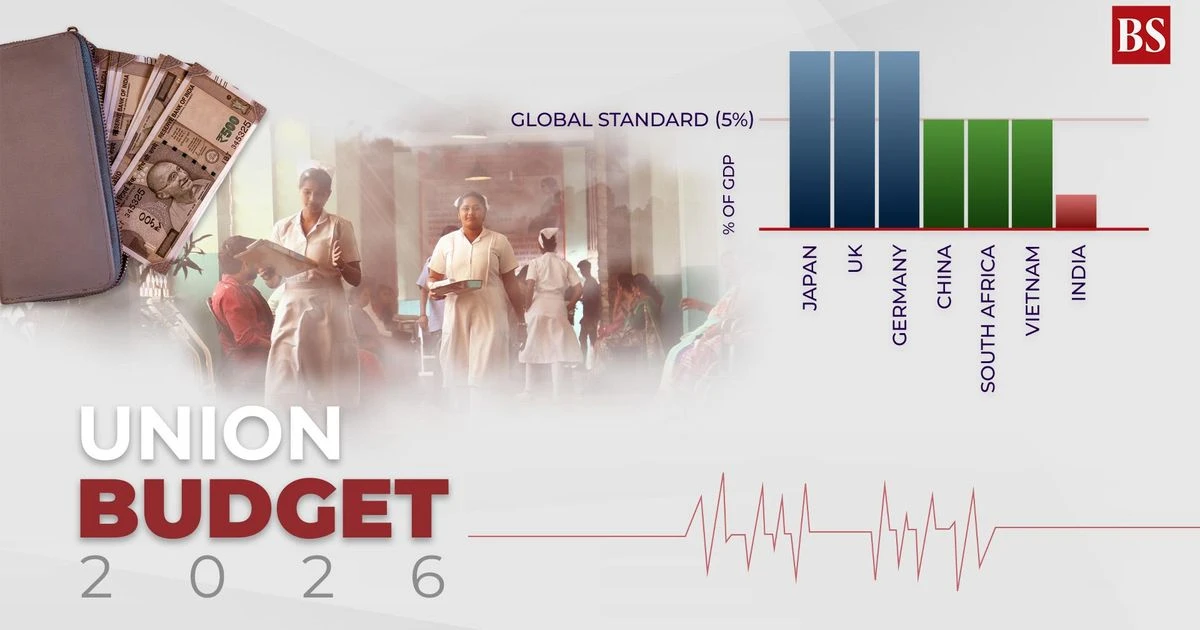
Ahead of Union Budget 2026-27, health experts and industry voices argue India’s public health spending remains below 2% of GDP and needs a sustained increase to tackle rising disease burden and reduce out-of-pocket costs.
As the Union Budget 2026-27 approaches, health-sector voices are pressing for a sustained rise in public healthcare spending, arguing that India’s government health expenditure remains below 2% of GDP and trails global benchmarks. The debate is being sharpened by rising non-communicable diseases, persistent out-of-pocket costs and the growing need for stronger primary care and public health capacity.
Why the spending debate has returned before Budget 2026-27
Analysts point to a mismatch between India’s expanding economy and a health system under pressure from a dual disease burden. Even where programmes have expanded, experts argue that outcomes hinge on consistent financing for frontline delivery: clinics, staff, diagnostics, prevention and follow-up care. With households still paying a significant share of medical bills, advocates frame higher public spending as both a social need and an economic policy tool to reduce financial stress.
Global comparisons and domestic targets
International comparisons are frequently cited in the pre-budget discussion. Countries pursuing universal health coverage often allocate a higher share of GDP in public funds to health, while India’s level remains lower than many middle-income peers. Domestically, policy conversations continue to reference the National Health Policy objective of moving toward higher public health expenditure, alongside calls to improve efficiency and outcomes.
What health leaders want prioritised
Industry bodies and experts have urged budget planners to strengthen rural and semi-urban delivery networks, invest in preventive care, and expand risk-pooling mechanisms that can reduce household exposure to catastrophic medical costs. The core message is that a larger, predictable public funding base is needed to build resilient systems rather than only episodic programme boosts.
- Public health spending cited as under 2% of GDP
- Budget 2026-27 seen as a moment to signal a multi-year funding plan
- Focus areas: primary care, prevention, rural delivery, reducing out-of-pocket costs