EU and India sign Security and Defence Partnership, setting annual dialogue on maritime, cyber and counter-terrorism
The European Union and India signed a Security and Defence Partnership on January 27, 2026, on the margins of the EU-India Summit. The pact creates a structured framework for cooperation across areas including maritime security, cyber threats and counter-terrorism, with plans for an annual dialogue to review progress.
The European Union and India signed a Security and Defence Partnership on January 27, 2026, marking a new step in their strategic engagement at a time of heightened global security pressures. The agreement was signed by EU High Representative/Vice President Kaja Kallas and India’s External Affairs Minister Dr S. Jaishankar on the margins of the EU-India Summit.
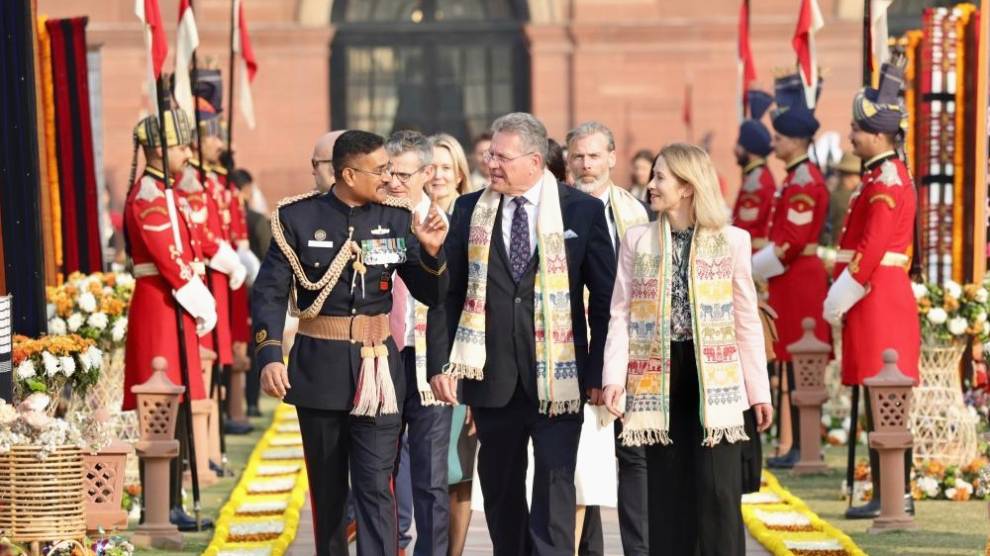
According to the European External Action Service (EEAS), the partnership establishes a comprehensive framework designed to structure dialogue and cooperation on security and defence and to deliver practical outcomes. Areas highlighted include maritime security, cyber security, counter-terrorism and related sectoral cooperation, building on existing consultations and strategic dialogues already underway.
A central feature of the pact is a dedicated annual EU-India Security and Defence Dialogue, supported by thematic exchanges and consultations on shared threats. The EEAS indicated that the partnership’s content can be reviewed to assess progress, steer cooperation and respond to evolving global challenges, signalling a mechanism intended to be iterative rather than static.
The partnership sits alongside the broader EU-India agenda, which has increasingly emphasised resilience in supply chains, digital innovation and cooperation on emerging technologies, while also expanding the remit of coordination on peace and security. European statements around the summit have framed India as a key partner for a rules-based international order and for pragmatic collaboration across regions.
In practical terms, the new framework could translate into more regular coordination between agencies, enhanced information-sharing practices, and joint workstreams that touch shipping lanes, cyber incident response, counter-terror coordination, and capacity-building. While such frameworks are not operational plans by themselves, they often provide the architecture for subsequent working groups and project-level agreements.
Officials have not published a detailed public timeline of deliverables beyond the annual dialogue structure, but the formalisation of security cooperation reflects both sides’ interest in predictable, institutionalised engagement. Additional documents referenced by the EEAS include the text of the partnership and related factsheets on EU-India relations.