EU–India trade talks ‘accelerated’ as global tariff fears grow; deal framed as a major strategic reset
European officials say EU–India trade negotiations picked up pace over the past six months as global tariff threats and supply-chain anxiety reshaped priorities, with leaders positioning the agreement as a high-stakes bid to deepen market access and reduce steep import duties in key sectors.
Momentum between the European Union and India has risen sharply over the past six months, as both sides pushed harder to close a wide-ranging trade agreement amid growing global tariff uncertainty and competition for resilient supply chains. European leaders have portrayed the pact as a major strategic and economic reset—one intended to strengthen two-way market access and counter disruptive trade shocks elsewhere.
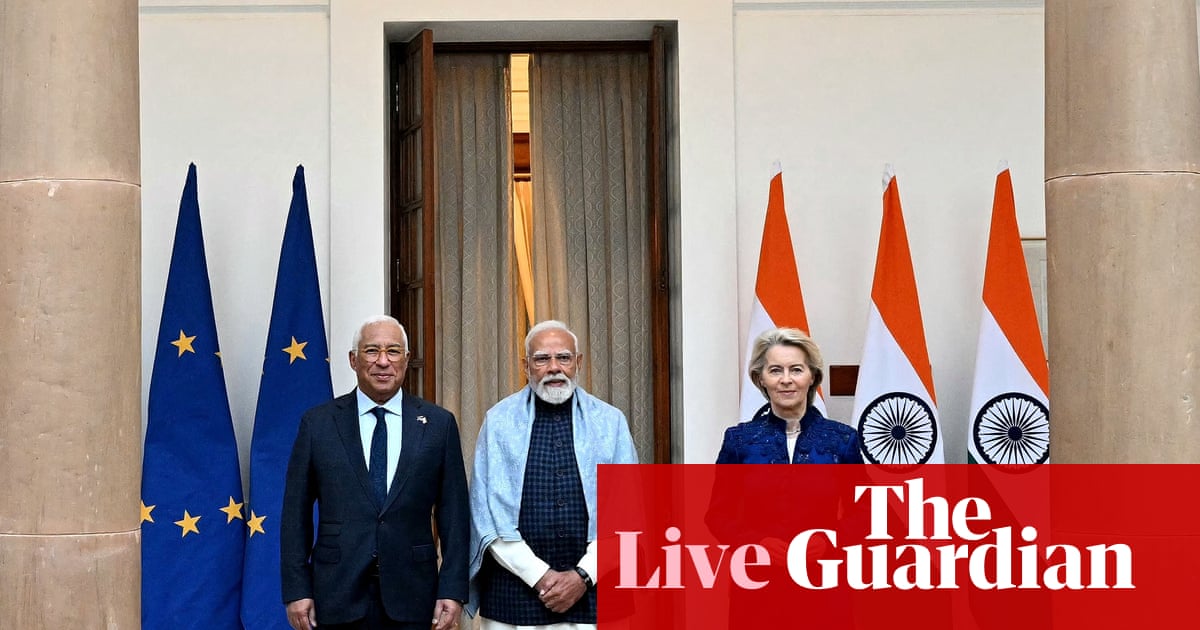
Why the EU and India sped up negotiations
European Commission President Ursula von der Leyen has publicly framed the agreement as exceptionally large in scope, arguing that the international backdrop—particularly fears of tougher tariffs and a more fragmented trading system—made faster progress necessary. For India, the timing aligns with a broader push to attract investment, diversify export markets and expand industrial capacity while maintaining policy space.
Tariffs and market access at the centre
A core flashpoint has been India’s high import duties in select categories, with the deal expected to reduce barriers and open access across multiple sectors. European negotiators have highlighted that tariff cuts—especially in segments such as automobiles—could change pricing and competition dynamics in India’s consumer market. India, in turn, is expected to seek clearer access for its strengths in manufacturing, chemicals and pharmaceuticals, along with smoother compliance pathways for exports.
What changes if tariff cuts go through
- Imported goods, including vehicles and industrial inputs, could become cheaper or more competitive over time
- Indian firms may gain more predictable routes into EU markets if standards and processes are streamlined
- Supply chains may diversify away from single-country dependence, affecting sourcing and investment flows
- Political pressure could rise domestically where sectors fear sudden competition or price disruption
While final implementation details will matter most for businesses, the deal’s bigger significance is geopolitical: it signals deeper EU–India alignment at a time when global trade rules are under strain. Market watchers will look for timelines, sector-specific carve-outs and transitional arrangements that decide who benefits first and who bears adjustment costs.