India–EU ‘mother of all FTAs’ announced: 96% trade to go tariff-free over time; small cars and dairy kept protected
India and the European Union have finalised a wide-ranging free trade agreement designed to reduce tariffs across most traded goods over phased timelines, while keeping sensitive sectors such as cereals, dairy and small cars outside key concessions.
India and the European Union on Tuesday, 27 January 2026, announced the finalisation of a sweeping Free Trade Agreement that officials are billing as the “mother of all FTAs”. The pact is structured around phased tariff reduction across the bulk of two-way trade, while explicitly ring-fencing politically sensitive categories such as cereals and dairy, and protecting India’s small-car segment.
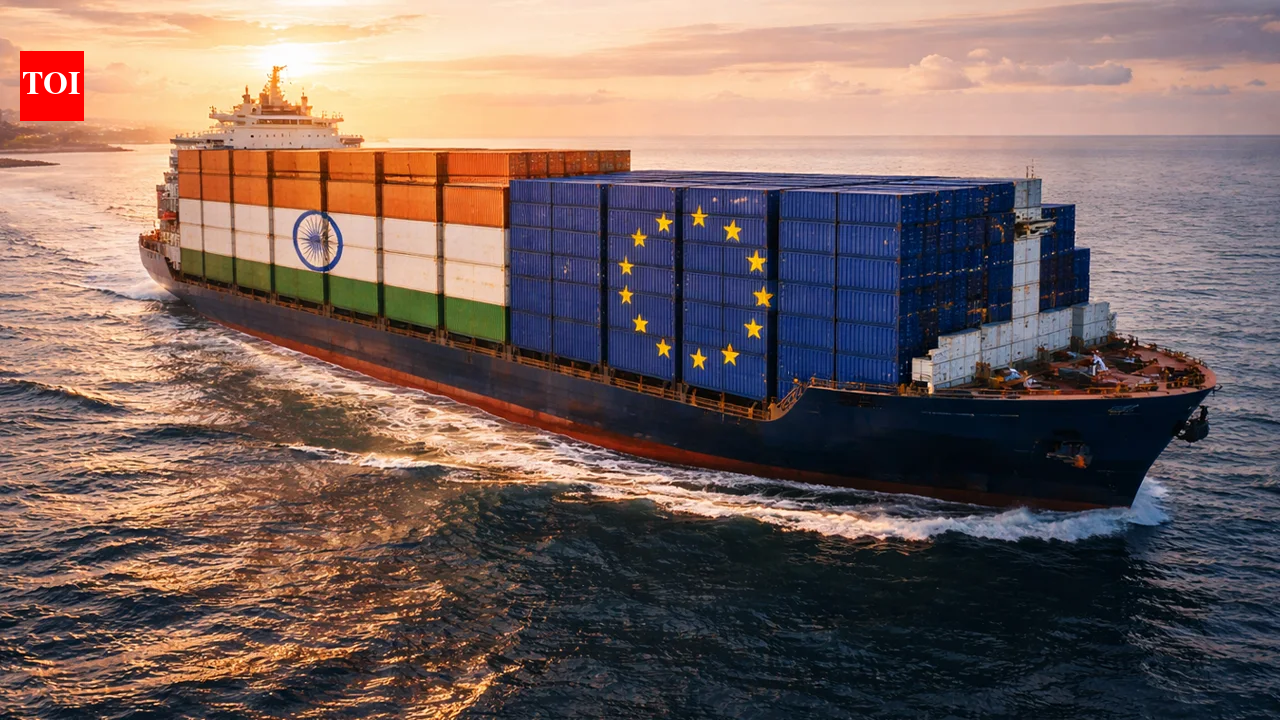
What changes for trade flows
The headline promise is that a very large share of trade by value is expected to move toward zero-duty access over an agreed schedule. For Indian exporters, the agreement is positioned to improve competitiveness in Europe for labour-intensive sectors such as textiles and apparel, leather and footwear, select marine products, gems and jewellery, toys and sports goods.
On the EU side, India has agreed to open parts of its market in phases, including a calibrated approach for European automobiles and wines through product- and quantity-linked pathways rather than a blanket cut. Officials have said small cars remain protected, with liberalisation paced to manage competitive shocks in the domestic market.
Services, chapters and implementation
Beyond goods, the deal spans multiple chapters and includes commitments on services, along with other rulebook components such as rules of origin, IPR, labour and sustainable development, and support for small and medium enterprises. The agreement is expected to take effect after required approvals and is anticipated to roll out in stages over multiple years.
Business impact will depend on how quickly tariff lines are reduced, how quotas are set for sensitive categories, and how effectively firms navigate compliance requirements. Exporters will likely watch for early gains in categories that move to zero duty sooner, while import-competing sectors will track the pace of liberalisation.
Key takeaways for India Inc
- Better pricing power for Indian exports into the EU where duties fall to zero in phased steps
- Protection retained for politically sensitive farm products and small cars
- A longer runway for businesses to rework sourcing, documentation and standards compliance