Sensex, Nifty fall over 4% in January as FPIs sell, rupee weakens and global risks rise
India’s benchmark indices Sensex and Nifty slipped more than 4% in January 2026 amid sustained foreign portfolio investor selling, rupee weakness, and underwhelming corporate earnings. Global uncertainty and renewed tariff-related concerns also weighed on risk appetite, as investors turned cautious across emerging markets including India.
A rough month for Indian equities
Indian equity markets faced a broad-based decline through January 2026, with the Sensex and the Nifty down more than 4% during the month, according to the report. Market participants attributed the move to a combination of domestic and global factors that tightened financial conditions and reduced risk-taking, particularly in rate-sensitive and globally exposed sectors.
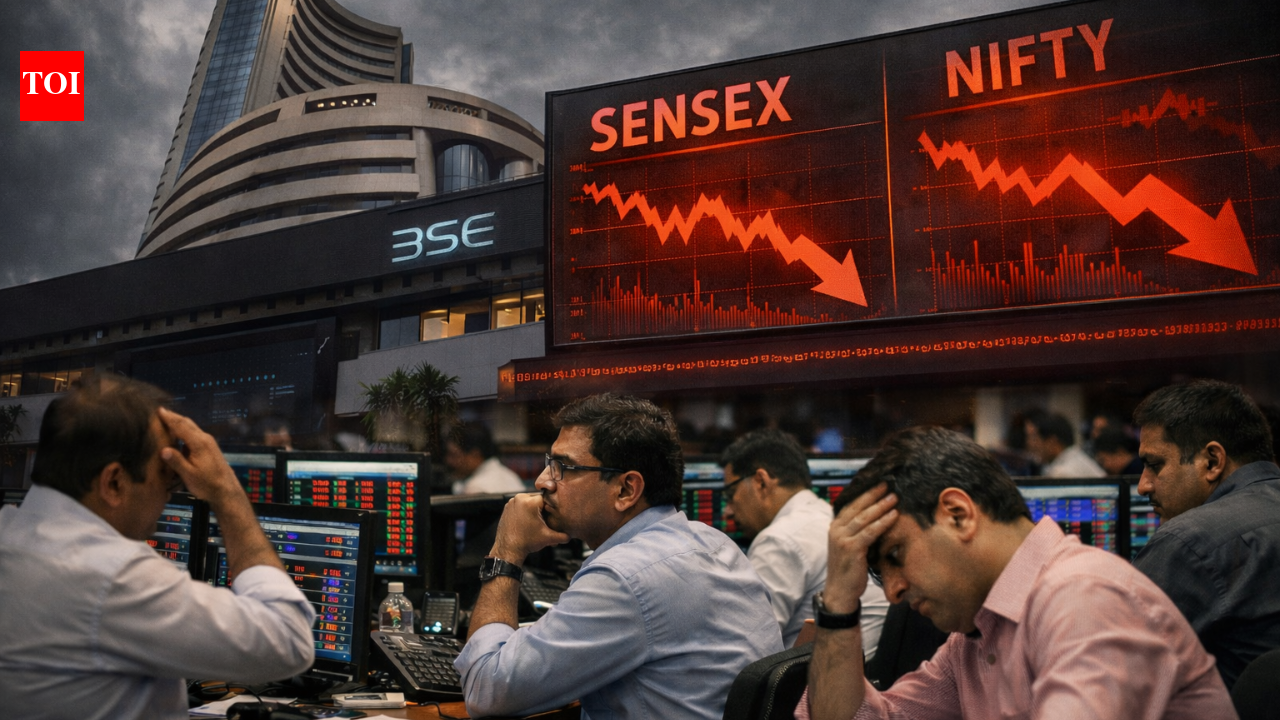
While day-to-day trading was shaped by company-specific news and sector rotations, the larger trend was driven by the direction of foreign flows and currency movement. When foreign investors reduce exposure, the pressure can be visible across index heavyweights, pulling down benchmarks even if some pockets remain resilient.
Key drivers: FPI outflows, rupee pressure, earnings
The report highlighted sustained foreign portfolio investor (FPI) selling as a major drag. Such outflows tend to tighten liquidity and can amplify volatility, especially when paired with a weaker currency. A declining rupee can raise imported cost pressures for some firms, influence bond-market expectations, and shift portfolio allocations across asset classes.
Corporate earnings also failed to provide a strong counterweight, with investors reacting cautiously to results and guidance. In periods when earnings growth looks uneven, markets often demand clearer visibility on margins, demand recovery, and balance-sheet stability before bidding prices higher.
Global uncertainty adds to the caution
Beyond India-specific factors, global risks contributed to weaker sentiment. The report pointed to geopolitical uncertainty and tariff-related concerns as part of the backdrop influencing investor behaviour. Such themes can affect export-linked businesses, global supply chains, and commodity pricing, indirectly shaping earnings expectations in India.
With markets sensitive to foreign flows and macro signals, investors are expected to track upcoming policy cues, earnings updates, and currency movement to gauge whether the sell-off stabilises or deepens. For retail investors, the month served as a reminder that global factors can quickly transmit to domestic benchmarks.