Sensex and Nifty fall over 4% in January as foreign outflows, rupee weakness and global risks weigh on markets: report
India’s benchmark indices Sensex and Nifty have declined over 4% so far in January 2026 amid foreign portfolio investor selling, a weakening rupee, muted earnings and global uncertainty, with investors looking ahead to Budget 2026-27 for signals on growth and stability.
Markets end January run-up under pressure
India’s benchmark equity indices have slipped more than 4% so far in January 2026, according to a report citing market data. The declines have been attributed to sustained foreign portfolio investor (FPI) outflows, rupee weakness, disappointing earnings in pockets of the market and heightened geopolitical and tariff-related uncertainty globally.
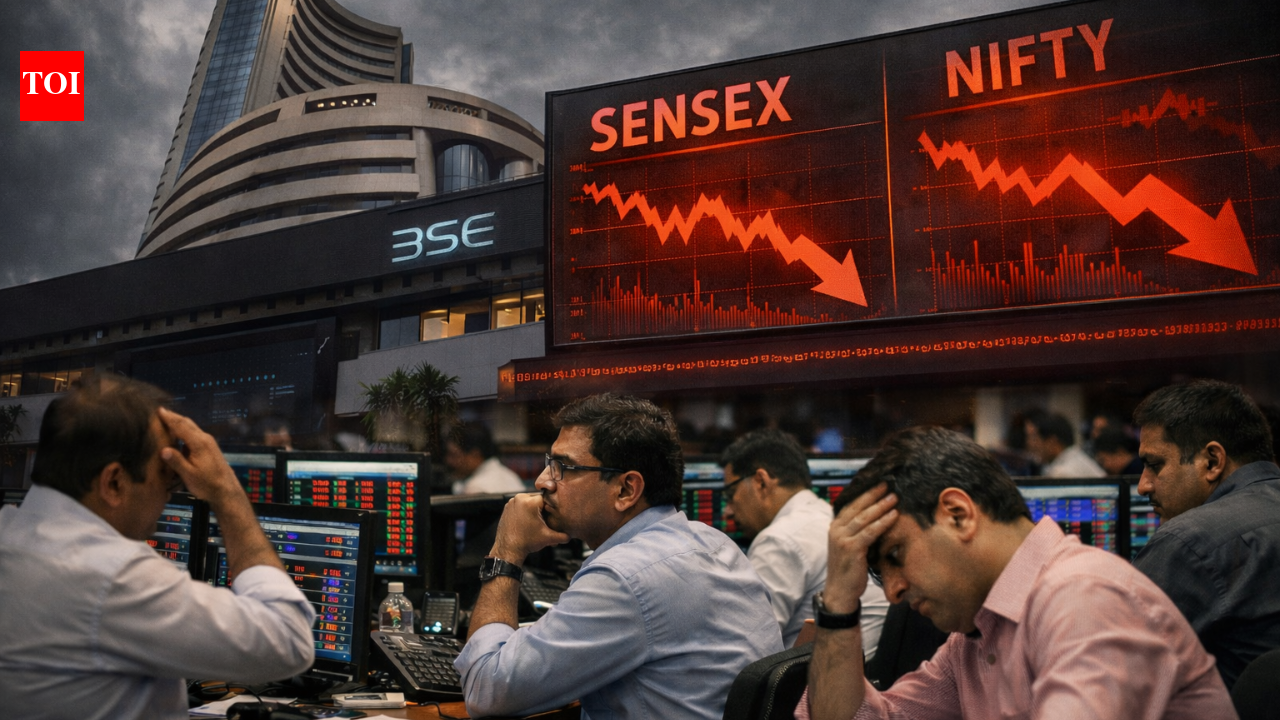
The report said the BSE Sensex fell 3,682.9 points (about 4.32%) during the month, while the NSE Nifty dropped 1,080.95 points (about 4.13%). Analysts pointed to a global risk-off mood that has driven overseas selling, while domestic investors weighed earnings and macro signals.
Global macro factors add to domestic volatility
Beyond local earnings, the report noted that elevated crude oil prices and rising global bond yields have reinforced risk aversion. With uncertainty around trade policy and geopolitical tensions, market sentiment has remained cautious, and high-beta sectors have faced sharper swings.
Earnings misses from select heavyweight stocks—spanning areas such as IT, banking and consumption-linked segments—were also cited as a factor dampening optimism at the start of the year, adding to the pressure from overseas flows and currency moves.
Budget expectations and historical patterns
The report quoted an analyst noting that January has historically been a weak month for equities and that markets have, in some years, fallen ahead of the Union Budget before recovering closer to, or after, the Republic Day period. With Budget 2026-27 approaching, participants are watching for policy signals that can balance growth support with macro stability.
For investors, the key questions now include whether foreign selling stabilises, whether the rupee finds support and whether the upcoming policy announcements provide clarity on fiscal priorities. Until then, the market tone is expected to stay sensitive to global cues and domestic earnings follow-through.